8 reasons why, as a Product Designer you should think as a Product Manager
Thinking like a Product Manager is essential for Product Designers in today's job market. Here I explore 8 reasons why.

June 7th, 2024
8 reasons why, as a Product Designer you should think as a Product Manager
Thinking like a Product Manager is essential for Product Designers in today's job market. Here I explore 8 reasons why.
June 7th, 2024
8 reasons why, as a Product Designer you should think as a Product Manager
Thinking like a Product Manager is essential for Product Designers in today's job market. Here I explore 8 reasons why.
June 7th, 2024
8 reasons why, as a Product Designer you should think as a Product Manager
Thinking like a Product Manager is essential for Product Designers in today's job market. Here I explore 8 reasons why.
Fernando Olivares
June 7th, 2024
8 reasons why, as a Product Designer you should think as a Product Manager
Thinking like a Product Manager is essential for Product Designers in today's job market. Here I explore 8 reasons why.
June 7th, 2024
Creating “pretty” designs or coming up with a nice design system these days is just the standard, not something to brag about. As a designer, it is something to have inherently present, much like your first and last name, which are simply used to refer to you as a person, and it will not get you a job.
Creating “pretty” designs or coming up with a nice design system these days is just the standard, not something to brag about. As a designer, it is something to have inherently present, much like your first and last name, which are simply used to refer to you as a person, and it will not get you a job.
Creating “pretty” designs or coming up with a nice design system these days is just the standard, not something to brag about. As a designer, it is something to have inherently present, much like your first and last name, which are simply used to refer to you as a person, and it will not get you a job.
Creating “pretty” designs or coming up with a nice design system these days is just the standard, not something to brag about. As a designer, it is something to have inherently present, much like your first and last name, which are simply used to refer to you as a person, and it will not get you a job.
Creating “pretty” designs or coming up with a nice design system these days is just the standard, not something to brag about. As a designer, it is something to have inherently present, much like your first and last name, which are simply used to refer to you as a person, and it will not get you a job.
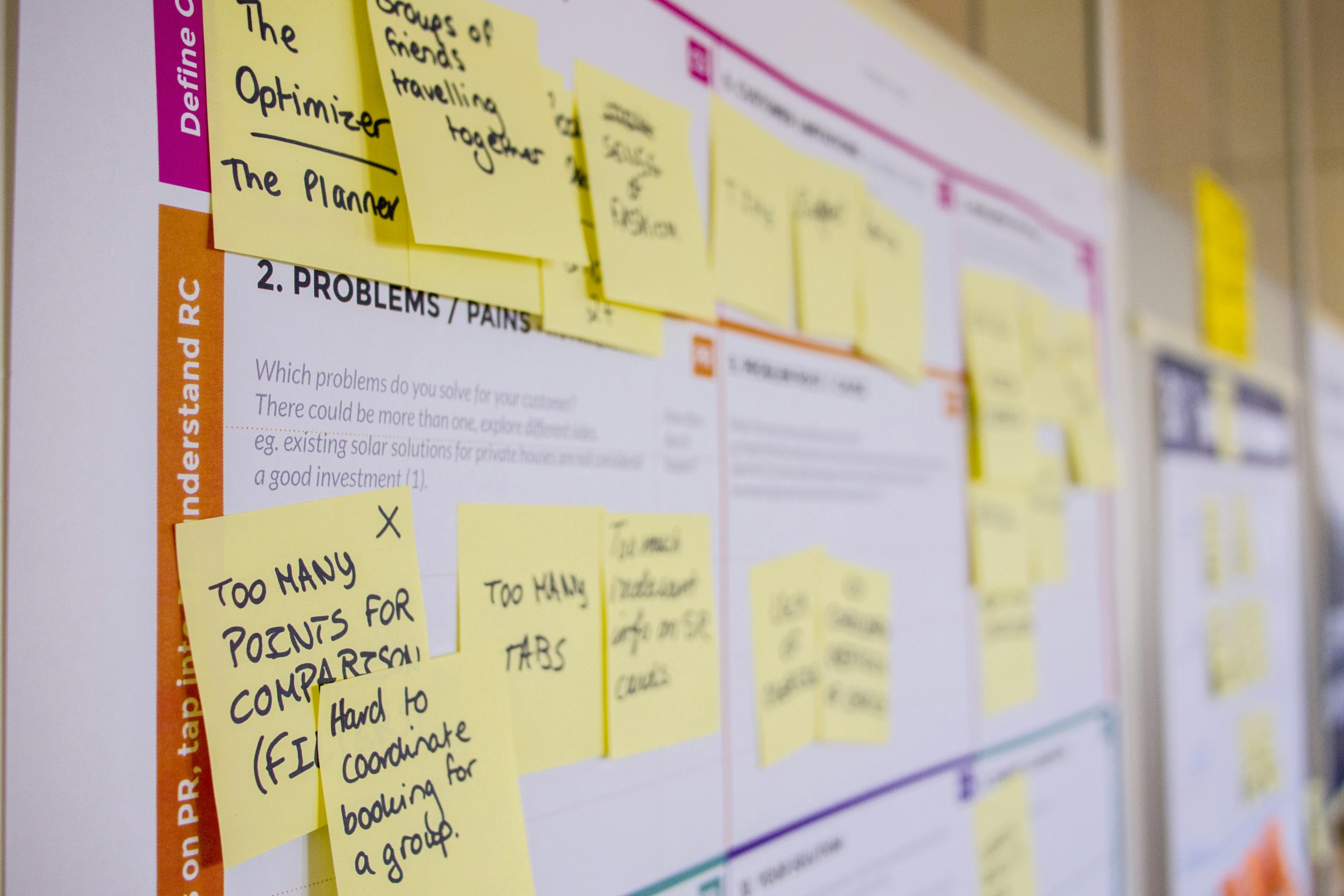
Photo by Daria Nepriakhina 🇺🇦, on Unsplash.
Photo by Daria Nepriakhina 🇺🇦, on Unsplash.
Photo by Daria Nepriakhina 🇺🇦, on Unsplash.
Photo by Daria Nepriakhina 🇺🇦, on Unsplash.
Photo by Daria Nepriakhina 🇺🇦, on Unsplash.
In my experience, what separates a good Product Designer from a “bad” one (and I’m hesitant to use the word “bad”, as I believe everyone has their value and it's a matter of finding where they fit and how they can help others) is primarily the “Product” aspect. It is no mystery why the role is called “Product Designer”, a point many designers overlook, leading to failure. I like to compare a product with something produced by a “factory”, where Product Managers own the requirements, Product Designers create the interface, and Engineers connect the components. Something that Product Managers understand very well. Having this knowledge and using it to your advantage will make life easier for both you and your organization. This is why I have put together these 8 reasons why, as a Product Designer, you should think like a Product Manager:
In my experience, what separates a good Product Designer from a “bad” one (and I’m hesitant to use the word “bad”, as I believe everyone has their value and it's a matter of finding where they fit and how they can help others) is primarily the “Product” aspect. It is no mystery why the role is called “Product Designer”, a point many designers overlook, leading to failure. I like to compare a product with something produced by a “factory”, where Product Managers own the requirements, Product Designers create the interface, and Engineers connect the components. Something that Product Managers understand very well. Having this knowledge and using it to your advantage will make life easier for both you and your organization. This is why I have put together these 8 reasons why, as a Product Designer, you should think like a Product Manager:
In my experience, what separates a good Product Designer from a “bad” one (and I’m hesitant to use the word “bad”, as I believe everyone has their value and it's a matter of finding where they fit and how they can help others) is primarily the “Product” aspect. It is no mystery why the role is called “Product Designer”, a point many designers overlook, leading to failure. I like to compare a product with something produced by a “factory”, where Product Managers own the requirements, Product Designers create the interface, and Engineers connect the components. Something that Product Managers understand very well. Having this knowledge and using it to your advantage will make life easier for both you and your organization. This is why I have put together these 8 reasons why, as a Product Designer, you should think like a Product Manager:
In my experience, what separates a good Product Designer from a “bad” one (and I’m hesitant to use the word “bad”, as I believe everyone has their value and it's a matter of finding where they fit and how they can help others) is primarily the “Product” aspect. It is no mystery why the role is called “Product Designer”, a point many designers overlook, leading to failure. I like to compare a product with something produced by a “factory”, where Product Managers own the requirements, Product Designers create the interface, and Engineers connect the components. Something that Product Managers understand very well. Having this knowledge and using it to your advantage will make life easier for both you and your organization. This is why I have put together these 8 reasons why, as a Product Designer, you should think like a Product Manager:
In my experience, what separates a good Product Designer from a “bad” one (and I’m hesitant to use the word “bad”, as I believe everyone has their value and it's a matter of finding where they fit and how they can help others) is primarily the “Product” aspect. It is no mystery why the role is called “Product Designer”, a point many designers overlook, leading to failure. I like to compare a product with something produced by a “factory”, where Product Managers own the requirements, Product Designers create the interface, and Engineers connect the components. Something that Product Managers understand very well. Having this knowledge and using it to your advantage will make life easier for both you and your organization. This is why I have put together these 8 reasons why, as a Product Designer, you should think like a Product Manager:
1. It will open you to new conversations
As written in the books, the weight of your role as a Product Designer focuses more on the solution side than on problem definition, which is typically owned by Product Managers. That said, this doesn’t mean the roles cannot be interchanged; there is the theory, and then there is the reality. Engaging in early conversations, where the levels of uncertainty are highest, will set you apart from typical Product Designers. Bringing real value to these discussions will make you more enjoyable to work with and also more aware of decision-making earlier in the process. This will impact how you solve problems and ultimately propose solutions. Your colleagues will be happy, your organization will benefit, and you will feel more fulfilled.
1. It will open you to new conversations
As written in the books, the weight of your role as a Product Designer focuses more on the solution side than on problem definition, which is typically owned by Product Managers. That said, this doesn’t mean the roles cannot be interchanged; there is the theory, and then there is the reality. Engaging in early conversations, where the levels of uncertainty are highest, will set you apart from typical Product Designers. Bringing real value to these discussions will make you more enjoyable to work with and also more aware of decision-making earlier in the process. This will impact how you solve problems and ultimately propose solutions. Your colleagues will be happy, your organization will benefit, and you will feel more fulfilled.
1. It will open you to new conversations
As written in the books, the weight of your role as a Product Designer focuses more on the solution side than on problem definition, which is typically owned by Product Managers. That said, this doesn’t mean the roles cannot be interchanged; there is the theory, and then there is the reality. Engaging in early conversations, where the levels of uncertainty are highest, will set you apart from typical Product Designers. Bringing real value to these discussions will make you more enjoyable to work with and also more aware of decision-making earlier in the process. This will impact how you solve problems and ultimately propose solutions. Your colleagues will be happy, your organization will benefit, and you will feel more fulfilled.
1. It will open you to new conversations
As written in the books, the weight of your role as a Product Designer focuses more on the solution side than on problem definition, which is typically owned by Product Managers. That said, this doesn’t mean the roles cannot be interchanged; there is the theory, and then there is the reality. Engaging in early conversations, where the levels of uncertainty are highest, will set you apart from typical Product Designers. Bringing real value to these discussions will make you more enjoyable to work with and also more aware of decision-making earlier in the process. This will impact how you solve problems and ultimately propose solutions. Your colleagues will be happy, your organization will benefit, and you will feel more fulfilled.
1. It will open you to new conversations
As written in the books, the weight of your role as a Product Designer focuses more on the solution side than on problem definition, which is typically owned by Product Managers. That said, this doesn’t mean the roles cannot be interchanged; there is the theory, and then there is the reality. Engaging in early conversations, where the levels of uncertainty are highest, will set you apart from typical Product Designers. Bringing real value to these discussions will make you more enjoyable to work with and also more aware of decision-making earlier in the process. This will impact how you solve problems and ultimately propose solutions. Your colleagues will be happy, your organization will benefit, and you will feel more fulfilled.
2. You will know better what to design, and when not to design
We've all been there, eager to dive straight into the Figmas, assuming we already know which lines and shapes to drop in, only to later discover that we've missed some context, that the business goals have changed, or that in the end, the project will not require an interface design. Even though the role is called "Product Designer," it doesn't mean that the design of that product must solely come in the form of an interface. Sometimes, the most effective solutions come in the form of a backend update – perhaps by changing certain logics, negotiating a new agreement with our client, or even by determining that no changes are necessary. All of this is part of the process, and being aware of it will keep you closely involved, open to new ideas, and maintain your enthusiasm at the right level.
2. You will know better what to design, and when not to design
We've all been there, eager to dive straight into the Figmas, assuming we already know which lines and shapes to drop in, only to later discover that we've missed some context, that the business goals have changed, or that in the end, the project will not require an interface design. Even though the role is called "Product Designer," it doesn't mean that the design of that product must solely come in the form of an interface. Sometimes, the most effective solutions come in the form of a backend update – perhaps by changing certain logics, negotiating a new agreement with our client, or even by determining that no changes are necessary. All of this is part of the process, and being aware of it will keep you closely involved, open to new ideas, and maintain your enthusiasm at the right level.
2. You will know better what to design, and when not to design
We've all been there, eager to dive straight into the Figmas, assuming we already know which lines and shapes to drop in, only to later discover that we've missed some context, that the business goals have changed, or that in the end, the project will not require an interface design. Even though the role is called "Product Designer," it doesn't mean that the design of that product must solely come in the form of an interface. Sometimes, the most effective solutions come in the form of a backend update – perhaps by changing certain logics, negotiating a new agreement with our client, or even by determining that no changes are necessary. All of this is part of the process, and being aware of it will keep you closely involved, open to new ideas, and maintain your enthusiasm at the right level.
2. You will know better what to design, and when not to design
We've all been there, eager to dive straight into the Figmas, assuming we already know which lines and shapes to drop in, only to later discover that we've missed some context, that the business goals have changed, or that in the end, the project will not require an interface design. Even though the role is called "Product Designer," it doesn't mean that the design of that product must solely come in the form of an interface. Sometimes, the most effective solutions come in the form of a backend update – perhaps by changing certain logics, negotiating a new agreement with our client, or even by determining that no changes are necessary. All of this is part of the process, and being aware of it will keep you closely involved, open to new ideas, and maintain your enthusiasm at the right level.
2. You will know better what to design, and when not to design
We've all been there, eager to dive straight into the Figmas, assuming we already know which lines and shapes to drop in, only to later discover that we've missed some context, that the business goals have changed, or that in the end, the project will not require an interface design. Even though the role is called "Product Designer," it doesn't mean that the design of that product must solely come in the form of an interface. Sometimes, the most effective solutions come in the form of a backend update – perhaps by changing certain logics, negotiating a new agreement with our client, or even by determining that no changes are necessary. All of this is part of the process, and being aware of it will keep you closely involved, open to new ideas, and maintain your enthusiasm at the right level.
3. You will collaborate better
Understanding the challenges of a Product Manager will make you more empathetic, versatile, and trustworthy. The Product Manager in your team will see you as a supportive partner, rather than merely a resource they call upon whenever they need design work. By having this broader perspective, you'll be empowered to ask better questions, challenge assumptions, and actively participate in non-design related meetings alongside them.
3. You will collaborate better
Understanding the challenges of a Product Manager will make you more empathetic, versatile, and trustworthy. The Product Manager in your team will see you as a supportive partner, rather than merely a resource they call upon whenever they need design work. By having this broader perspective, you'll be empowered to ask better questions, challenge assumptions, and actively participate in non-design related meetings alongside them.
3. You will collaborate better
Understanding the challenges of a Product Manager will make you more empathetic, versatile, and trustworthy. The Product Manager in your team will see you as a supportive partner, rather than merely a resource they call upon whenever they need design work. By having this broader perspective, you'll be empowered to ask better questions, challenge assumptions, and actively participate in non-design related meetings alongside them.
3. You will collaborate better
Understanding the challenges of a Product Manager will make you more empathetic, versatile, and trustworthy. The Product Manager in your team will see you as a supportive partner, rather than merely a resource they call upon whenever they need design work. By having this broader perspective, you'll be empowered to ask better questions, challenge assumptions, and actively participate in non-design related meetings alongside them.
3. You will collaborate better
Understanding the challenges of a Product Manager will make you more empathetic, versatile, and trustworthy. The Product Manager in your team will see you as a supportive partner, rather than merely a resource they call upon whenever they need design work. By having this broader perspective, you'll be empowered to ask better questions, challenge assumptions, and actively participate in non-design related meetings alongside them.
4. You will be more business aware
In the end, every product ultimately revolves around one thing: business. If your focus is solely on design, then you will be missing a leg to whatever you're building. As a Product Designer, I've found myself spending several weeks in a row discussing business objectives rather than simply crafting Figma files. Understanding not only the goals for your users but also for your company will make everything smoother. By operating in the right context, you will feel as if the pixels are meant to be moved in one direction: the one that “feels” right.
4. You will be more business aware
In the end, every product ultimately revolves around one thing: business. If your focus is solely on design, then you will be missing a leg to whatever you're building. As a Product Designer, I've found myself spending several weeks in a row discussing business objectives rather than simply crafting Figma files. Understanding not only the goals for your users but also for your company will make everything smoother. By operating in the right context, you will feel as if the pixels are meant to be moved in one direction: the one that “feels” right.
4. You will be more business aware
In the end, every product ultimately revolves around one thing: business. If your focus is solely on design, then you will be missing a leg to whatever you're building. As a Product Designer, I've found myself spending several weeks in a row discussing business objectives rather than simply crafting Figma files. Understanding not only the goals for your users but also for your company will make everything smoother. By operating in the right context, you will feel as if the pixels are meant to be moved in one direction: the one that “feels” right.
4. You will be more business aware
In the end, every product ultimately revolves around one thing: business. If your focus is solely on design, then you will be missing a leg to whatever you're building. As a Product Designer, I've found myself spending several weeks in a row discussing business objectives rather than simply crafting Figma files. Understanding not only the goals for your users but also for your company will make everything smoother. By operating in the right context, you will feel as if the pixels are meant to be moved in one direction: the one that “feels” right.
4. You will be more business aware
In the end, every product ultimately revolves around one thing: business. If your focus is solely on design, then you will be missing a leg to whatever you're building. As a Product Designer, I've found myself spending several weeks in a row discussing business objectives rather than simply crafting Figma files. Understanding not only the goals for your users but also for your company will make everything smoother. By operating in the right context, you will feel as if the pixels are meant to be moved in one direction: the one that “feels” right.
5. You will prioritize better
One area where Product Managers excel is prioritization. With their arsenal of frameworks like RICE, Value vs. Effort, Kano Model, Story Mapping, MoSCoW, among others, they effectively contextualize problems and determine the most urgent to address. As a Product Designer, you may not use these frameworks on the product backlog daily. However, being familiar with prioritization methods will not only offer insight into decision-making but will also enable you to apply this logic to prioritize your design backlog. It will guide you on which designs to tackle first and where to focus your efforts, rather than relying solely on subjective criteria.
5. You will prioritize better
One area where Product Managers excel is prioritization. With their arsenal of frameworks like RICE, Value vs. Effort, Kano Model, Story Mapping, MoSCoW, among others, they effectively contextualize problems and determine the most urgent to address. As a Product Designer, you may not use these frameworks on the product backlog daily. However, being familiar with prioritization methods will not only offer insight into decision-making but will also enable you to apply this logic to prioritize your design backlog. It will guide you on which designs to tackle first and where to focus your efforts, rather than relying solely on subjective criteria.
5. You will prioritize better
One area where Product Managers excel is prioritization. With their arsenal of frameworks like RICE, Value vs. Effort, Kano Model, Story Mapping, MoSCoW, among others, they effectively contextualize problems and determine the most urgent to address. As a Product Designer, you may not use these frameworks on the product backlog daily. However, being familiar with prioritization methods will not only offer insight into decision-making but will also enable you to apply this logic to prioritize your design backlog. It will guide you on which designs to tackle first and where to focus your efforts, rather than relying solely on subjective criteria.
5. You will prioritize better
One area where Product Managers excel is prioritization. With their arsenal of frameworks like RICE, Value vs. Effort, Kano Model, Story Mapping, MoSCoW, among others, they effectively contextualize problems and determine the most urgent to address. As a Product Designer, you may not use these frameworks on the product backlog daily. However, being familiar with prioritization methods will not only offer insight into decision-making but will also enable you to apply this logic to prioritize your design backlog. It will guide you on which designs to tackle first and where to focus your efforts, rather than relying solely on subjective criteria.
5. You will prioritize better
One area where Product Managers excel is prioritization. With their arsenal of frameworks like RICE, Value vs. Effort, Kano Model, Story Mapping, MoSCoW, among others, they effectively contextualize problems and determine the most urgent to address. As a Product Designer, you may not use these frameworks on the product backlog daily. However, being familiar with prioritization methods will not only offer insight into decision-making but will also enable you to apply this logic to prioritize your design backlog. It will guide you on which designs to tackle first and where to focus your efforts, rather than relying solely on subjective criteria.
6. Your team will love you
Everyone loves to work with that person who understands their struggles, who always listens, and who can see more solutions than problems. Having a wider vision will give you this ability—to connect the dots between the frontender of your team and the data scientist or the backend, to shed more light and bring new layers of context to the conversations that intersect. Your Product Manager will trust you and delegate more to you, making you an important asset for the team, not only in terms of work but also as a human being. In the end, we are building machines, but we are not one, nor are our users.
6. Your team will love you
Everyone loves to work with that person who understands their struggles, who always listens, and who can see more solutions than problems. Having a wider vision will give you this ability—to connect the dots between the frontender of your team and the data scientist or the backend, to shed more light and bring new layers of context to the conversations that intersect. Your Product Manager will trust you and delegate more to you, making you an important asset for the team, not only in terms of work but also as a human being. In the end, we are building machines, but we are not one, nor are our users.
6. Your team will love you
Everyone loves to work with that person who understands their struggles, who always listens, and who can see more solutions than problems. Having a wider vision will give you this ability—to connect the dots between the frontender of your team and the data scientist or the backend, to shed more light and bring new layers of context to the conversations that intersect. Your Product Manager will trust you and delegate more to you, making you an important asset for the team, not only in terms of work but also as a human being. In the end, we are building machines, but we are not one, nor are our users.
6. Your team will love you
Everyone loves to work with that person who understands their struggles, who always listens, and who can see more solutions than problems. Having a wider vision will give you this ability—to connect the dots between the frontender of your team and the data scientist or the backend, to shed more light and bring new layers of context to the conversations that intersect. Your Product Manager will trust you and delegate more to you, making you an important asset for the team, not only in terms of work but also as a human being. In the end, we are building machines, but we are not one, nor are our users.
6. Your team will love you
Everyone loves to work with that person who understands their struggles, who always listens, and who can see more solutions than problems. Having a wider vision will give you this ability—to connect the dots between the frontender of your team and the data scientist or the backend, to shed more light and bring new layers of context to the conversations that intersect. Your Product Manager will trust you and delegate more to you, making you an important asset for the team, not only in terms of work but also as a human being. In the end, we are building machines, but we are not one, nor are our users.
7. You will be more independent and trustworthy
When your Product Manager is out for vacation, or worse, is sick (I wish no sickness to anybody, but this happens), no problem—your team will know who to turn to. You will be able to lead the situations and guide your company through the “black hole”. Your Product Manager can rest assured, knowing that matters are in capable hands, and will return refreshed. I bet many Product Managers would do anything for a designer like this.
7. You will be more independent and trustworthy
When your Product Manager is out for vacation, or worse, is sick (I wish no sickness to anybody, but this happens), no problem—your team will know who to turn to. You will be able to lead the situations and guide your company through the “black hole”. Your Product Manager can rest assured, knowing that matters are in capable hands, and will return refreshed. I bet many Product Managers would do anything for a designer like this.
7. You will be more independent and trustworthy
When your Product Manager is out for vacation, or worse, is sick (I wish no sickness to anybody, but this happens), no problem—your team will know who to turn to. You will be able to lead the situations and guide your company through the “black hole”. Your Product Manager can rest assured, knowing that matters are in capable hands, and will return refreshed. I bet many Product Managers would do anything for a designer like this.
7. You will be more independent and trustworthy
When your Product Manager is out for vacation, or worse, is sick (I wish no sickness to anybody, but this happens), no problem—your team will know who to turn to. You will be able to lead the situations and guide your company through the “black hole”. Your Product Manager can rest assured, knowing that matters are in capable hands, and will return refreshed. I bet many Product Managers would do anything for a designer like this.
7. You will be more independent and trustworthy
When your Product Manager is out for vacation, or worse, is sick (I wish no sickness to anybody, but this happens), no problem—your team will know who to turn to. You will be able to lead the situations and guide your company through the “black hole”. Your Product Manager can rest assured, knowing that matters are in capable hands, and will return refreshed. I bet many Product Managers would do anything for a designer like this.
8. You will become more hireable
Last but not least, and probably one of the most crucial points, especially after the tech layoffs of 2023 which still have an impact today, is that you will become more hireable.
8. You will become more hireable
Last but not least, and probably one of the most crucial points, especially after the tech layoffs of 2023 which still have an impact today, is that you will become more hireable.
8. You will become more hireable
Last but not least, and probably one of the most crucial points, especially after the tech layoffs of 2023 which still have an impact today, is that you will become more hireable.
8. You will become more hireable
Last but not least, and probably one of the most crucial points, especially after the tech layoffs of 2023 which still have an impact today, is that you will become more hireable.
8. You will become more hireable
Last but not least, and probably one of the most crucial points, especially after the tech layoffs of 2023 which still have an impact today, is that you will become more hireable.
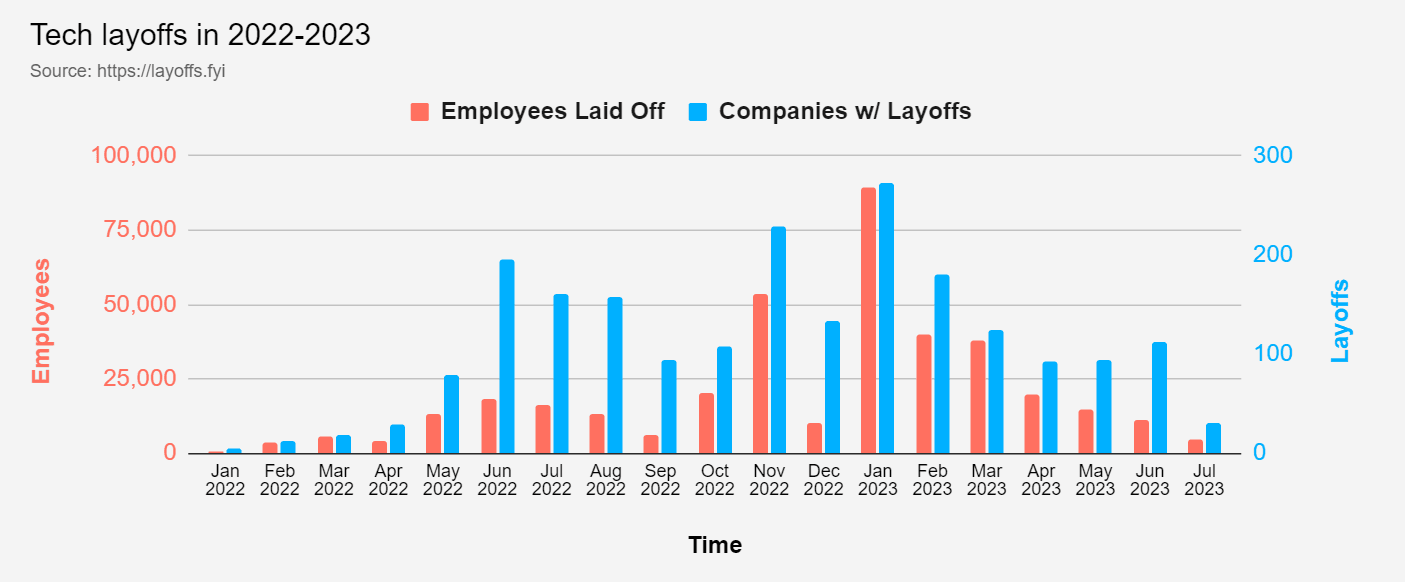
Tech layoffs in 2022 to 2023. Source: Layoffs.fyi
In today's job market, companies are hiring more cautiously, being highly selective, and seeking top talent. They are unlikely to hire a designer who lacks business orientation or has only narrow experience in their industry. Instead, they prefer candidates with a blend of industry knowledge and product design expertise. Demonstrating that you can deal with uncertainty and take a problem from its highest level to an adequate solution can mark the difference between getting hired and continuously jumping from one selection process to another.
In today's job market, companies are hiring more cautiously, being highly selective, and seeking top talent. They are unlikely to hire a designer who lacks business orientation or has only narrow experience in their industry. Instead, they prefer candidates with a blend of industry knowledge and product design expertise. Demonstrating that you can deal with uncertainty and take a problem from its highest level to an adequate solution can mark the difference between getting hired and continuously jumping from one selection process to another.
In today's job market, companies are hiring more cautiously, being highly selective, and seeking top talent. They are unlikely to hire a designer who lacks business orientation or has only narrow experience in their industry. Instead, they prefer candidates with a blend of industry knowledge and product design expertise. Demonstrating that you can deal with uncertainty and take a problem from its highest level to an adequate solution can mark the difference between getting hired and continuously jumping from one selection process to another.
In today's job market, companies are hiring more cautiously, being highly selective, and seeking top talent. They are unlikely to hire a designer who lacks business orientation or has only narrow experience in their industry. Instead, they prefer candidates with a blend of industry knowledge and product design expertise. Demonstrating that you can deal with uncertainty and take a problem from its highest level to an adequate solution can mark the difference between getting hired and continuously jumping from one selection process to another.
In today's job market, companies are hiring more cautiously, being highly selective, and seeking top talent. They are unlikely to hire a designer who lacks business orientation or has only narrow experience in their industry. Instead, they prefer candidates with a blend of industry knowledge and product design expertise. Demonstrating that you can deal with uncertainty and take a problem from its highest level to an adequate solution can mark the difference between getting hired and continuously jumping from one selection process to another.
The bottom line
In today's competitive job market, simply being a skilled designer is not enough. Companies are looking for Product Designers who can think like Product Managers—who understand business objectives, can prioritize effectively, and collaborate seamlessly across teams. Embracing this mindset will not only make you a more valuable team member but also significantly increase your hireability. By combining design expertise with a deep understanding of product development and business strategy, you will stand out as a top candidate and ensure long-term success in your career.
The bottom line
In today's competitive job market, simply being a skilled designer is not enough. Companies are looking for Product Designers who can think like Product Managers—who understand business objectives, can prioritize effectively, and collaborate seamlessly across teams. Embracing this mindset will not only make you a more valuable team member but also significantly increase your hireability. By combining design expertise with a deep understanding of product development and business strategy, you will stand out as a top candidate and ensure long-term success in your career.
The bottom line
In today's competitive job market, simply being a skilled designer is not enough. Companies are looking for Product Designers who can think like Product Managers—who understand business objectives, can prioritize effectively, and collaborate seamlessly across teams. Embracing this mindset will not only make you a more valuable team member but also significantly increase your hireability. By combining design expertise with a deep understanding of product development and business strategy, you will stand out as a top candidate and ensure long-term success in your career.
The bottom line
In today's competitive job market, simply being a skilled designer is not enough. Companies are looking for Product Designers who can think like Product Managers—who understand business objectives, can prioritize effectively, and collaborate seamlessly across teams. Embracing this mindset will not only make you a more valuable team member but also significantly increase your hireability. By combining design expertise with a deep understanding of product development and business strategy, you will stand out as a top candidate and ensure long-term success in your career.
The bottom line
In today's competitive job market, simply being a skilled designer is not enough. Companies are looking for Product Designers who can think like Product Managers—who understand business objectives, can prioritize effectively, and collaborate seamlessly across teams. Embracing this mindset will not only make you a more valuable team member but also significantly increase your hireability. By combining design expertise with a deep understanding of product development and business strategy, you will stand out as a top candidate and ensure long-term success in your career.
Fernando Olivares
Product Designer
2026
Fernando Olivares
Product Designer
2026